The Storytelling of Costume Design: what we discover about Bernadette’s time and culture
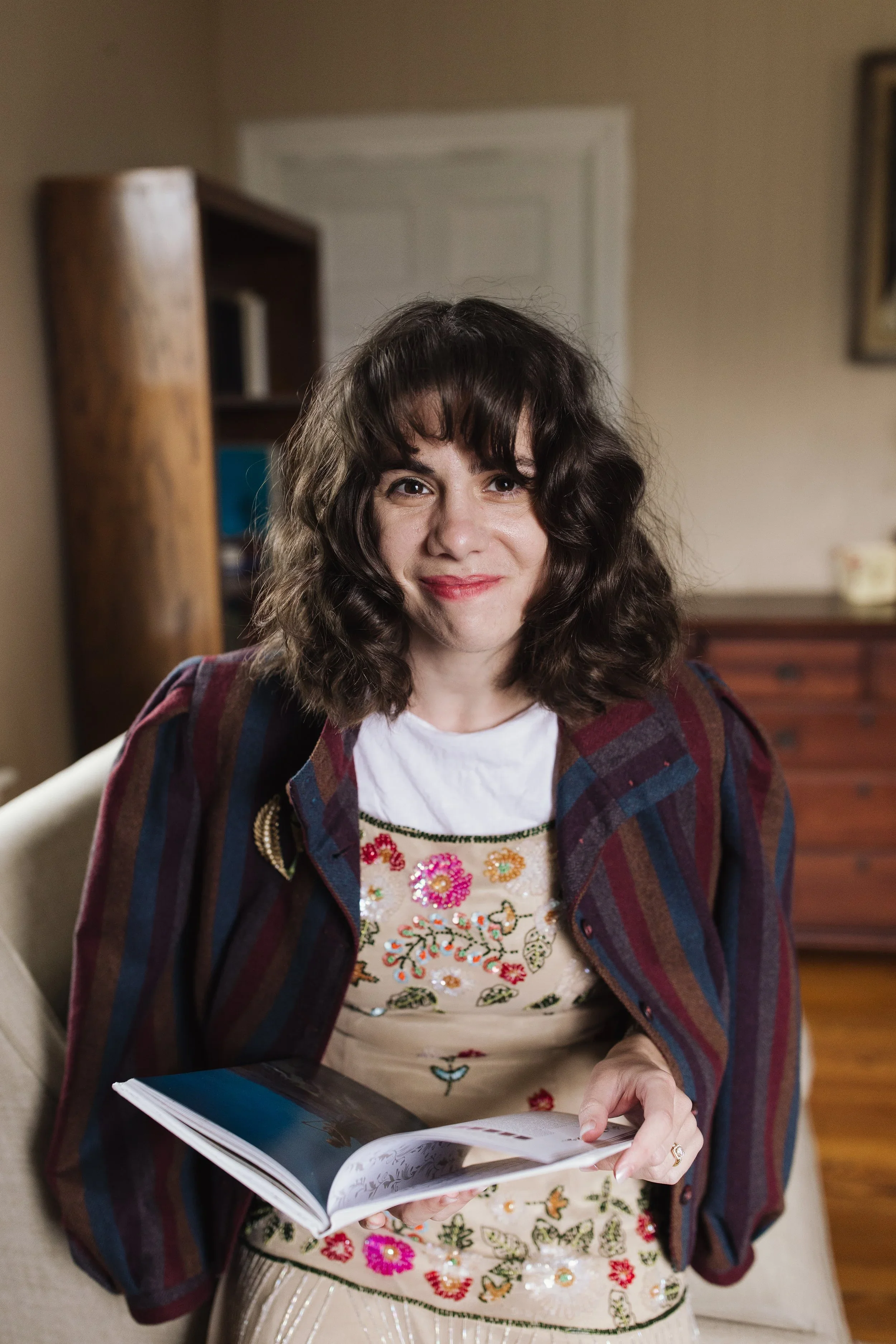
I had the pleasure of speaking with Agnés Noden, Costume Designer, and Rose Grousset, Costume Assistant, about their designs for Bernadette and the Lady of Lourdes. For those of us who are not in the film industry, a costume can seem like an afterthought or frivolous detail. I am excited to unpack for you the intentionality of storytelling through costume and how these garments bring to life the vision of the director, Daniel Johnson.
The costumes are telling of time, culture, and the atmosphere of the film
Noden began by describing the role of costume design, “Thanks to the costume, the actor can embody the character. It helps one find their acting style. Each garment is lined with meaning and gives the audience clues about the standard of life, social class, and occupation of the character. It embodies the state of mind and atmosphere of the film.”
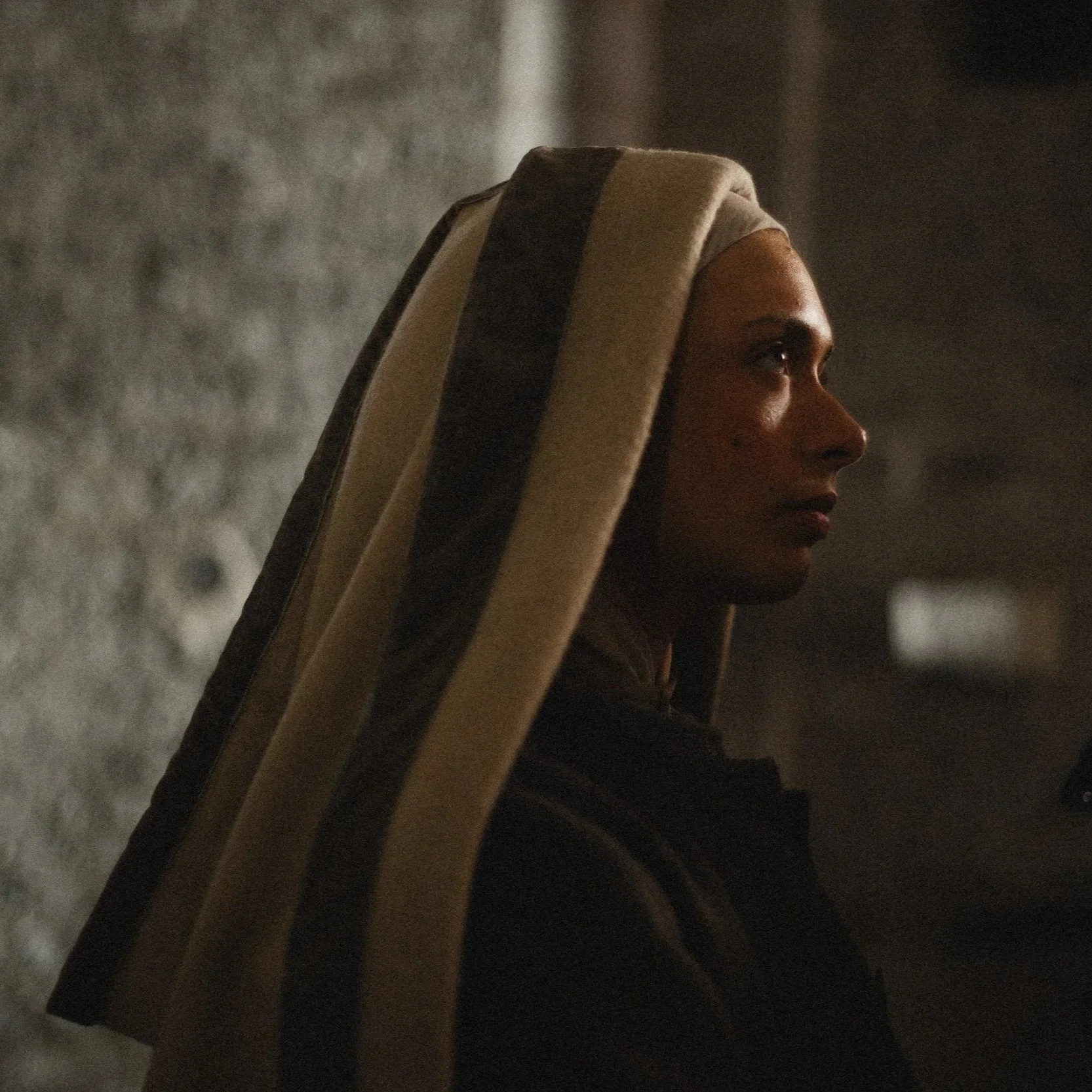
In the instance of Bernadette and the Lady of Lourdes, instead of wearing the historical Pyrenees fabrics which are full of light and color, the costumes were designed with a subdued and somber coloring to communicate the gravity of Bernadette’s life. Noden clarified that it was not odd to change the coloring, as she states, “It is part of my job to not stay in the historical indications of the culture but must move with the atmosphere of the movie and reinforce the director’s vision.” She does not need to create a garment that is the exact likeness of a historical garb, but in collaboration with the director, she must primarily consider how to communicate the feeling of the film.
Part of the artistry in the design process is the ingenuity, especially for those historical garments that we lack reference for, as Noden explains, “It is hard to create costumes worn in the lowest class. Since these garments were used a lot for daily activities, they were worn down and not preserved or kept in museums unlike the costumes of the bourgeois and higher classes which were only worn on special occasions and well preserved so we have those for references.” Grousset loved the costumes that the characters would wear in their everyday life because they look real, relatable, and it took time to design the concept for each.
The creative process of costume design
Noden always begins her design process by first becoming acquainted with the script in order to understand the director’s vision, because there are so many ways to tell the same story. She completes extensive research on the historical and cultural background (color, material, how the garments are worn, the way they are made, what they are used for, dress codes, why people would wear specific outfits for their jobs or location). Once she is familiar with the atmosphere, she shares her research with the director, so he knows the artistic and historical options. Then, Noden will begin the stitching of the outfits and create mockups with fabric samples to help the director develop his vision more clearly. Once confirmed, she works with a tailor and seamstress.
Bernadette’s costume and the role of dye
In the case of Bernadette and the Lady of Lourdes, Noden needed to secure a dyer to work with so they would have the exact color palette for the movie. The blue carcao (bodice) of young Bernadette at home with her family needed to be a distinct blue but not too bright. Additionally, for the fifty actresses who played Sisters of Charity in the film, the wool habits they sourced from a costume company were originally blue, but they needed to wear a specific black. Noden worked with the dyer until the black matched what it would have been at the time.
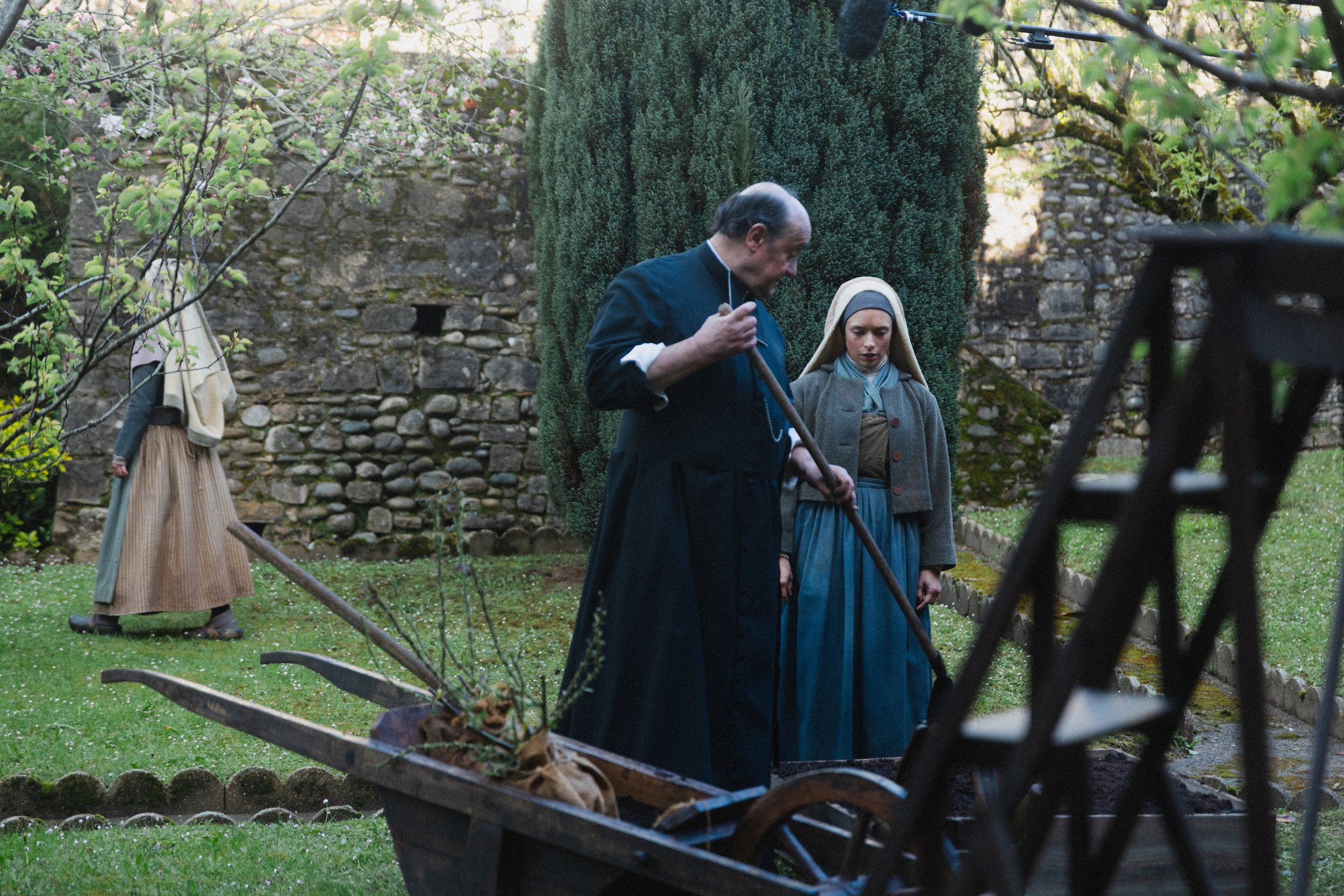
Bernadette’s costume was designed based on sketches from her era and her work as a shepherdess in the Pyrenees mountains. Pyrenees wool was specifically sourced for the costumes of Bernadette and her sisters. Noden shares about the specific research for Berandette’s capulet which is “A woolen cape that is typical of mountain folk and those who work outdoors. Her mother is a worker in the city and does not wear the capulet. The photographs that were taken of her later are not of her actual garments. She was given elegant city dresses that she could not have afforded herself but cleverly wanted to still wear her shepherd capulet for these photos and that speaks volumes of who she was. We do not have photos of Bernadette’s true outfits. All of her outfits in the film we had to imagine from scratch.”
It is likely that Bernadette wore her capulet for those photos because she wanted people to know her roots as the little shepherdess of the mountains who lived the hidden life.
The simplest costume required the most intricate design
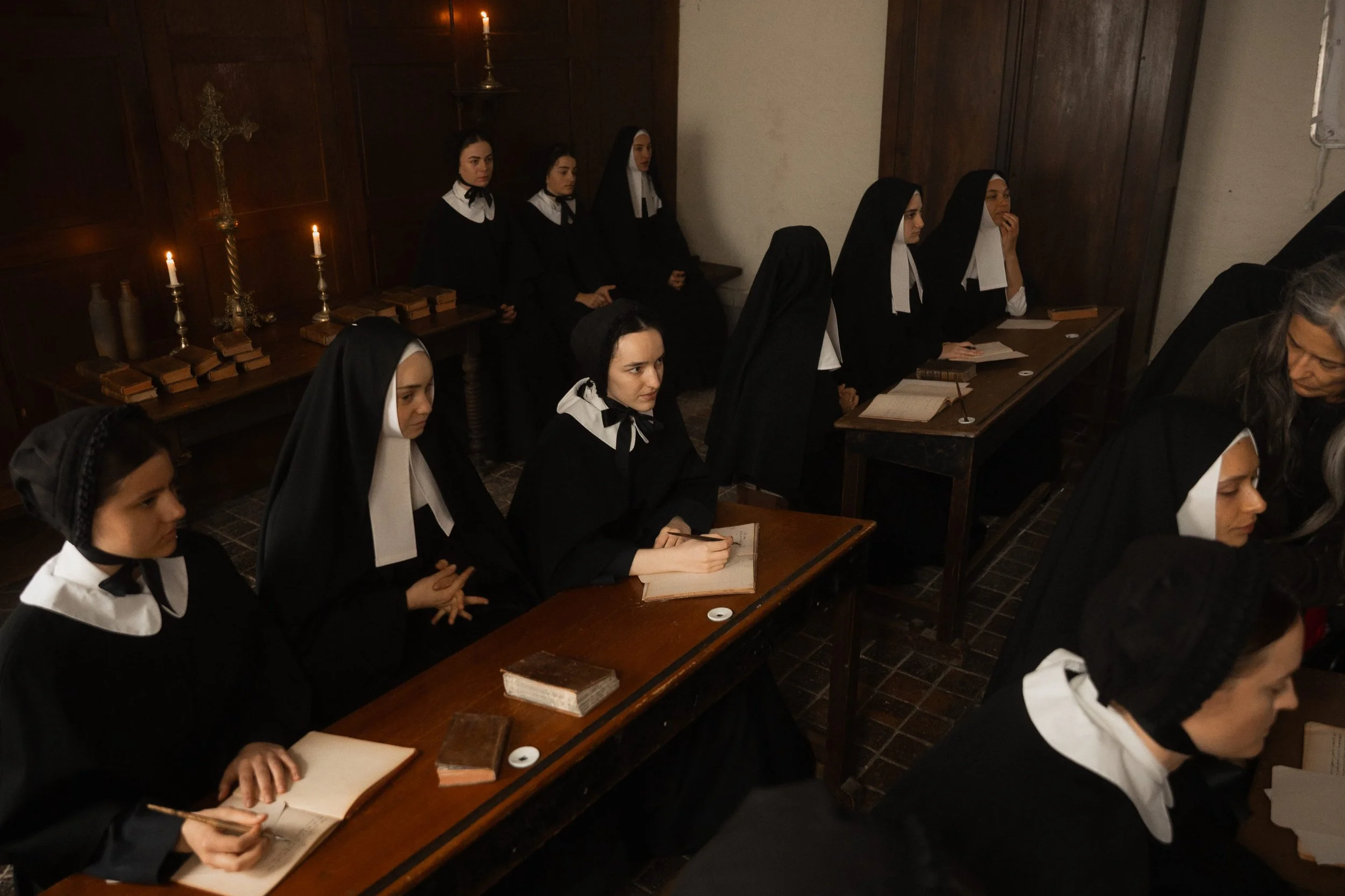
The costume that took the greatest effort, time, research, and design were the habits for the Sisters of Charity in Nevers. Most Catholics might overlook the habit design upon first glance because it seems simple enough with mainly a difference in the veil shape. But this was not the case. There are many elements to this habit. Noden and Grousset visited the original convent to see photos of the sisters from the time of Bernadette and get the patterns that were preserved for creating that version of the habit. In the film, the costumes for the actresses reflect the historically accurate habit in the time of Bernadette. Each habit weighed about six to seven pounds! In addition to the weighted fabric, the filming took place in warmer months, so it took time for the actresses to learn how to move about in these garments with intricate elements and fasteners.
In the film, there are some rare artifacts being worn
Noden and her team spent about a month and half preparing the costumes followed by fitting and organizing for filming. About three hundred costumes were prepared for the film. Not all required to be created from scratch, some were borrowed. If they could not find historical Pyrenees costumes to lease, then they went to local collectors who preserved these authentic 19th century garments. Some pieces of the costumes are authentically from the time and place of Bernadette!
The costume brings the actor into the character
Noden prioritizes the comfort of the actor in the costumes she designs as she explains, “I do not like when the costume looks like a costume. It needs to take the personality and physique of the character into account. It cannot look artificial. I don’t like when the costume is something thrown on instead of knowing what it was really intended for in that culture and historical time. The costume is a way for the actor to step into the skin of the character and become more familiar with them as they learn their
costume. They have to learn how to wear it and what it is used for. Our job is to tell them as much as we can so that when they are on set, they are just one with the costume, comfortable, and feels natural.”
As the actors step into heavy woolen habits and wooden shoes, the costume calls them out of themselves and into the character. A good costume allows the actor to do their job well and come alive in the skin of the character.
Johnson loved that the costumes were beautiful and fun to wear, “It brought about childlike joy and playfulness in the scenes that made it fun for everyone.” The costumes allow the film to come to life.
When you see Bernadette and the Lady of Lourdes, we are excited for you to notice the texture and storytelling from the garments and sets to the depth of the actors who brought their whole hearts into the film.